


Innovation Labs
Would you be interested in having ALC STEM bring our engaging programming at your school, after-school center, or community event? We’d love to collaborate with you! Our in-person visits typically range from $150-$250, depending on the duration of the session. We are also happy to work with you to meet your budget.
If your staff would like to lead the activities themselves, you can borrow equipment and curriculum kits from our resource library for hands-on STEM learning.
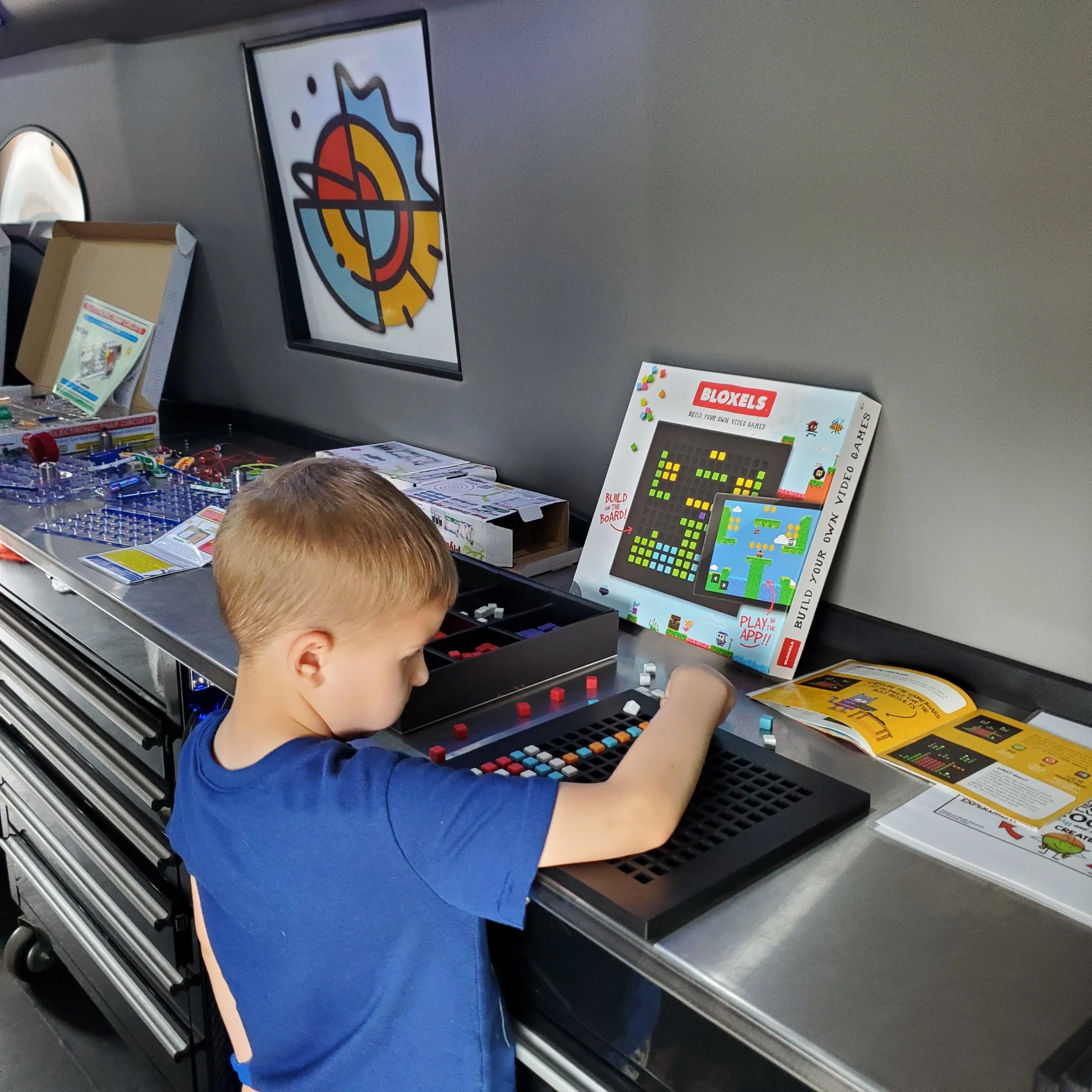
Additionally, we offer the option to schedule a visit from The Vortex, our mobile STEM lab and makerspace. This state-of-the-art vehicle is fully equipped to provide interactive learning experiences, making it perfect for school visits, community events, and groups like homeschoolers or youth programs seeking to explore STEM in a dynamic, hands-on way!
To schedule an Innovation Lab, email us at Monika.Kalembasa@scouting.org with some information about your needs.

Types of Activities
Short Duration - Single Sessions (30-45 minutes)
These simple hands-on activities are designed to help develop essential STEM skills such as problem solving, teamwork, and communication.
Extended Duration - Single Session (60-90 minutes)
These activities use math and science concepts to solve real-world problems through the engineering design process and incorporating technology where appropriate. Students will be systematically guided through a process of brainstorming, design, building, testing, re-design, and sharing of solutions.
Long-Term - Multiple Sessions (60-120 minutes each)
Students will develop advanced technical skills to address complex problems. These projects focus on open-ended challenges that require research, collaboration, and the engineering design process. They are extensive project-based learning experiences that showcase students’ skills and STEM proficiency.
-
Robotics/Coding
1)Ozobots- small programmable robots designed to teach coding and STEM concepts to children through hands-on activities.
a. Color Coding (K-3rd)
b. Block Coding(3rd-5th)
2)Spheros- programmable, spherical robots designed to teach STEM concepts.
a. Block Coding (3rd-8th)
b. Script Coding (6th-)
c. ASDW Controls (1st-8th)
3)Robotic Hand Activity- a hands-on project that uses materials to build a model of a hand that can mimic human finger movement. (2nd-8th)
4)Recon 6.0 Programmable Rover- pre-built and pre-programmed robot that teaches basic programming, math, and problem-solving skills (K-2nd)
Circuitry
1)Snap Circuits- kits that use building blocks with snaps to create working electronic circuits
2)Paper Circuits- hands-on activity that teaches basic electronics, combines art and engineering
3)Electric Play Dough Activity- teaches the principles of electricity and circuits by using conductive and insulating play dough
4)LittleBits- magnetic, electronic building blocks that allow users to create inventions without soldering or coding.
5)ScooterBots- a simple small 3D printed robot that uses small vibrating motors and batteries.
Computer Science
1)Unplugged Coding- introduces programming and computer science concepts using hands-on screen-free activities and games
Engineering Challenges
1)Make-and-Take Catapults- using engineering process, build and launch catapults
2)LEGO- open ended building prompts that encourage creativity and problem-solving
Measurement
1)Spheros- sensors allow to directly measure and interact with physical quantities like distance, speed, acceleration, angles, and light intensity
CAD
1) 3D Printers- students are able to touch, watch, and design their own 3D prints
a. Bambu
b. Toybox
c. Creality
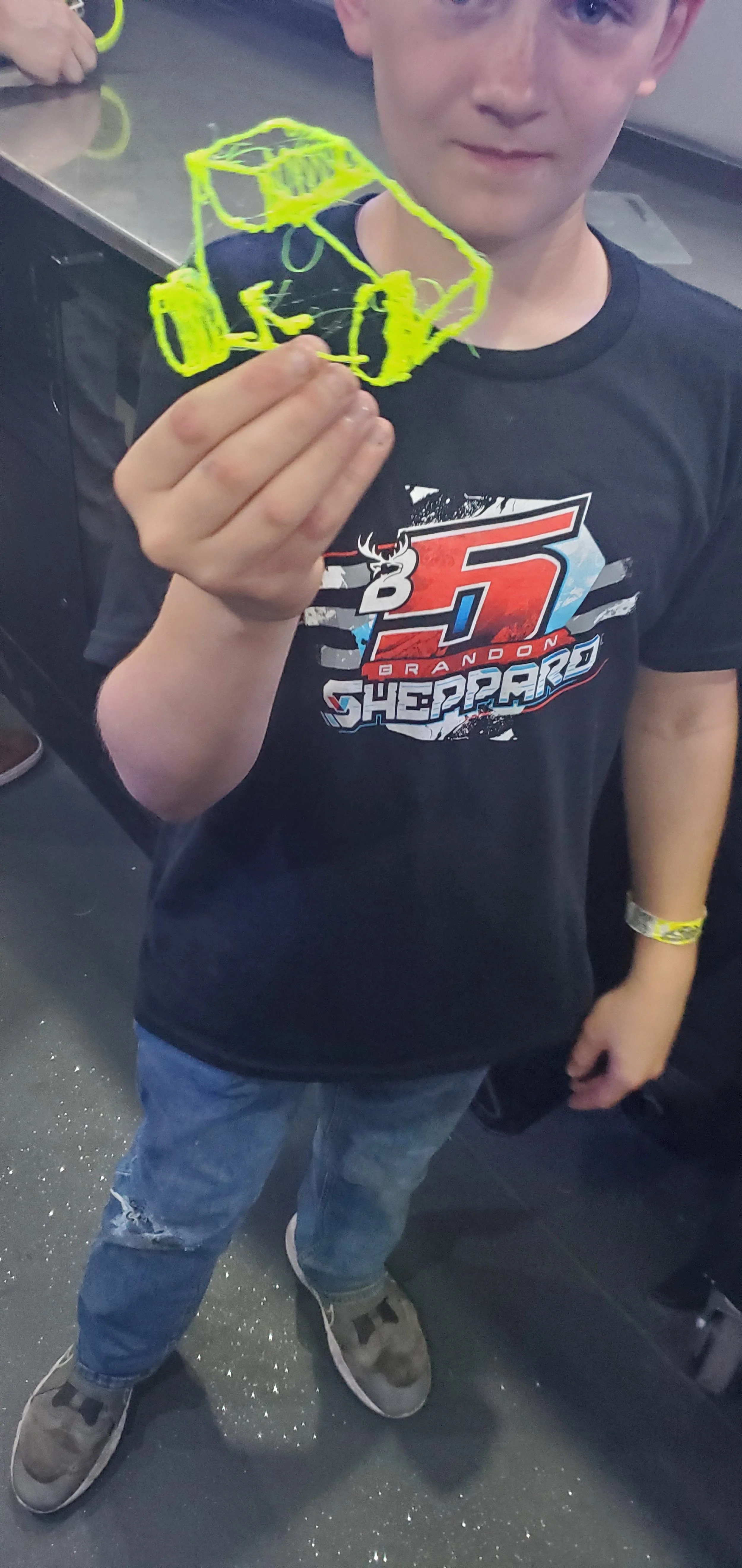
2) 3D Pens- handheld tool that extrudes heated plastic to draw and build 3D objects
Biology/Chemistry
1)Microscopes- equipment and slides to help explore the world they can’t see with their eyes alone
2)Oil Spill Activity- simulates an oil spill to help understand why they are so dangerous, explore different ways to clean it up
3)Chromatography Activity- science experiment that visually demonstrates that colors are mixes of other colors
4)Iodine Clock Reaction- science experiment where 2 clear liquids are mixed, then suddenly change colors
5)Forensics- simulate a crime scene investigation, where they collect and analyze evidence like fingerprints, footprints, and fibers to solve a mystery
Food Science
1)Smelly Balloons Activity- experiment to demonstrate diffusion and semi-permeable membranes
2)Solar Powered Pizza Oven Box- build a simple solar oven to gather the sun’s rays and cook a tasty treat
3)Lemon Volcanoes- chemistry experiment that creates a “lava”
Physics
1)Balloon Powered Cars- build simple car that can be powered by balloon propulsion
2)Magnets
3)Popsicle Stick Chain Reaction- teaches energy conversion and problem-solving
Geology/Earth Science
Mass Media